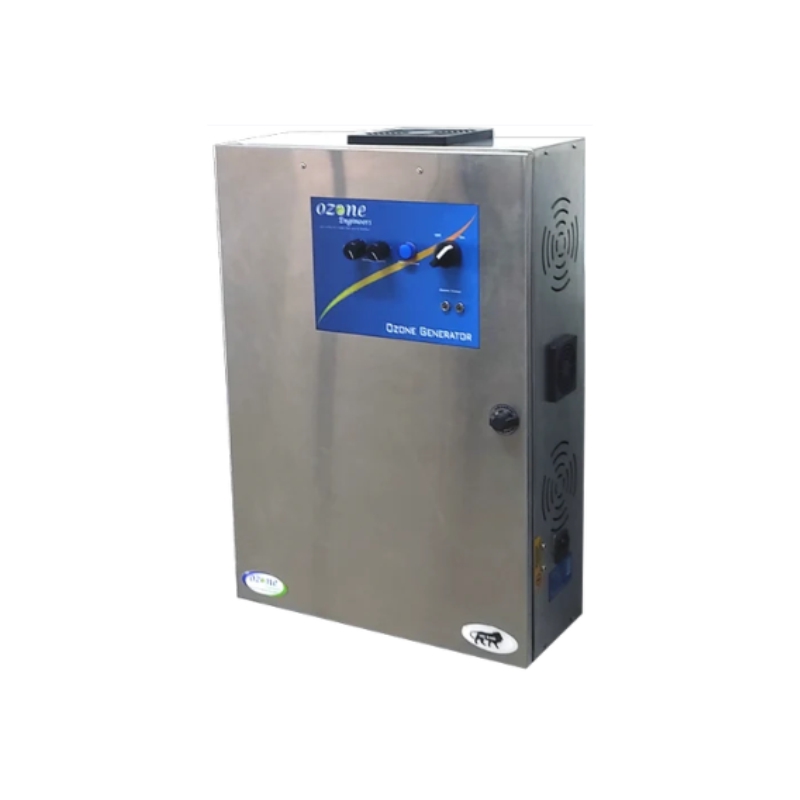
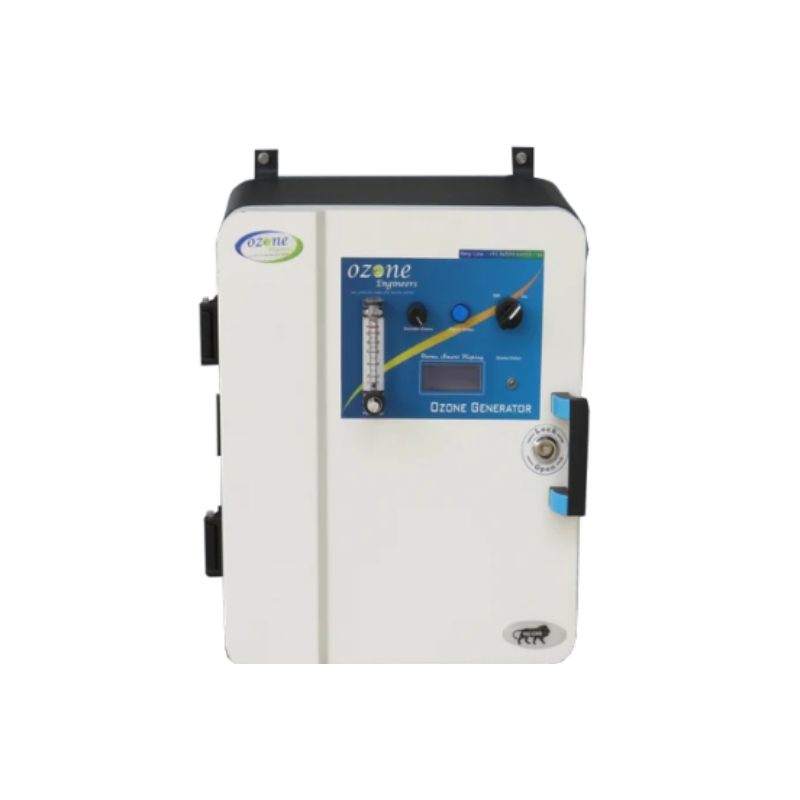
Ozonator For WWTP
Ozonator For WWTP is an ozonator for a Wastewater Treatment Plant (WWTP) is an advanced system that generates ozone (O3cap O sub 3𝑂3) on-site, using it as a powerful, chemical-free disinfectant and oxidant to remove pathogens, organic pollutants, colors, and odors from sewage, replacing chlorine and reducing sludge. It works by injecting O3cap O sub 3𝑂3 into water, which breaks down contaminants into harmless CO2cap C cap O sub 2𝐶𝑂2 and water, leaving no harmful residues and improving effluent quality for safer discharge or reuse, with benefits like better disinfection, reduced chemical use, and increased dissolved oxygen.
Description
Specifications
| Output Capacity | 50 gm/hr |
| Model Name/Number | WO-50 |
| Ozone Output | 20gm/hr |
| Feed Gas | Oxygen |
| Material | Mild Steel |
| Power Source | Electrical |
| Brand | Ozone Engineers |
An ozonator for a Wastewater Treatment Plant (WWTP) is an advanced system that generates ozone (O3cap O sub 3𝑂3) on-site, using it as a powerful, chemical-free disinfectant and oxidant to remove pathogens, organic pollutants, colors, and odors from sewage, replacing chlorine and reducing sludge. It works by injecting O3cap O sub 3𝑂3 into water, which breaks down contaminants into harmless CO2cap C cap O sub 2𝐶𝑂2 and water, leaving no harmful residues and improving effluent quality for safer discharge or reuse, with benefits like better disinfection, reduced chemical use, and increased dissolved oxygen.
How it Works
- Generation: An ozonator creates O3cap O sub 3𝑂3
from oxygen (O2cap O sub 2𝑂2) using high-voltage corona discharge. - Injection: The ozone gas is then injected into the wastewater.
- Oxidation/Disinfection: The highly reactive ozone oxidizes organic matter, kills bacteria/viruses, and removes colors/odors.
- Decomposition: Ozone naturally converts back to oxygen (O2cap O sub 2𝑂2), leaving no byproducts.
Key Benefits in WWTPs
- Superior Disinfection: More effective than chlorine against viruses and bacteria.
- Reduces Chemicals: Less need for chlorine and other chemicals, lowering costs and environmental impact.
- Improves Quality: Removes taste, odor, color (e.g., from textiles), and organic compounds.
- Eco-Friendly: Breaks down to oxygen, no harmful residues.
- Reduces Sludge: Can damage sludge bacteria, reducing overall sludge volume by up to 60%.
- On-Site Generation: Safer as it eliminates transportation and storage of hazardous gases.
Applications
- Final Disinfection: For safe water discharge or reuse.
- Advanced Oxidation Processes (AOPs): Converts ozone to hydroxyl radicals for even stronger oxidation.
- Dye & Color Removal: Highly effective for textile and industrial wastewater.


Reviews
There are no reviews yet.