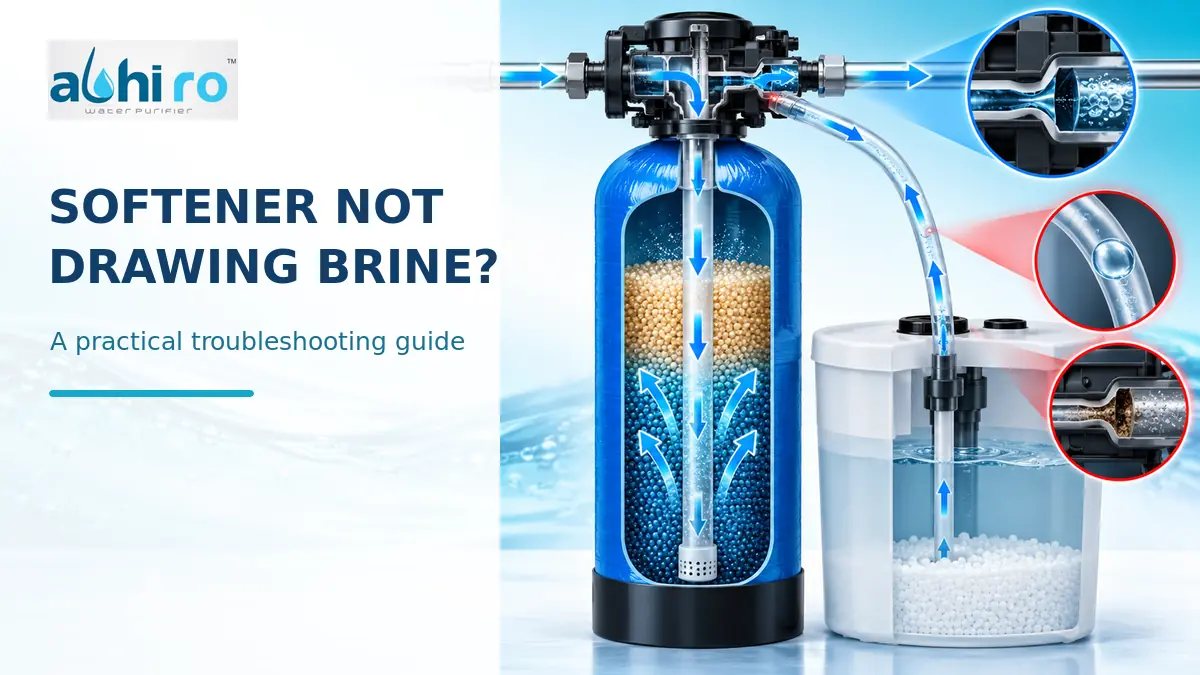
When a water softener is not drawing brine, the cause is usually in the injector or venturi, drain flow, brine line, valve cycle or brine-tank assembly—not automatically exhausted resin. Confirm the unit reaches the brine-draw stage, then check suction, restrictions and water levels systematically before changing settings or replacing components.
What You Will Learn
- How to confirm a genuine brine-draw problem
- The most common causes
- A safe step-by-step troubleshooting sequence
- How salt bridging and brine levels affect regeneration
- What to verify after correction
- Frequently asked questions
How to Confirm the Softener Is Not Drawing Brine
A high outlet-hardness reading alone does not prove a brine-draw failure. First confirm that the control valve actually enters the correct regeneration stage and that the brine level does not fall while that stage is running.
- The brine-tank water level remains unchanged during brine draw.
- Salt consumption is much lower than the established operating pattern.
- The unit completes a cycle but hardness returns immediately.
- Air bubbles or visible gaps appear in a transparent brine line.
- The valve produces weak or no drain flow during the relevant cycle.
- The brine tank repeatedly overfills or remains unusually full.
Observe only through safe sampling points or transparent tubing provided for inspection. Do not loosen a pressurised fitting. For automatic valves, use the installed model’s manual to identify brine draw, slow rinse and refill; cycle names and timings are not universal.
Common Causes of a Brine-Draw Failure
Brine is normally drawn by a pressure difference created inside the control valve. Anything that reduces inlet pressure, restricts the injector or drain, or allows air into the suction path can stop that action.
Blocked injector or venturi
Fine debris, iron deposits, salt crystals or scale can partially block the injector, screen or internal passage. The softener may still pass water in service while producing insufficient suction during regeneration.
Restricted drain flow
A kinked drain tube, blocked drain fitting, excessive drain-line lift or incorrectly sized flow control can prevent the hydraulic conditions required for brine draw. Check the installed valve’s drain requirements rather than enlarging or removing a flow control without approval.
Air leak in the brine line
Loose connections, cracked tubing, a damaged seal or an improperly seated air-check assembly can admit air. A suction-side air leak may not visibly leak water, so inspect the complete line and its connections.
Valve programming or cycle fault
The controller may have an incorrect valve type, regeneration sequence or cycle duration. A stalled motor, damaged piston, seal or rotor can also keep the internal flow path from reaching the intended position.
Step-by-Step Brine Draw Troubleshooting
Work from simple external checks toward internal valve inspection. Internal servicing should be performed by a competent technician using the correct model instructions and replacement parts.
- Test inlet and outlet hardness. Use a suitable hardness test and record the result before changing the unit.
- Confirm the cycle. Verify the display or valve position reaches brine draw and remains there for the programmed period.
- Observe drain flow. Check that water reaches the drain without a kink, obstruction or backpressure problem.
- Watch the brine level. Mark the starting level and confirm whether it drops during the cycle.
- Inspect the brine line. Look for loose fittings, cracks, flattened tubing and air entry from the valve to the brine assembly.
- Check the brine valve and air check. Ensure the float or safety shut-off moves freely and is not stuck in the closed position.
- Isolate and depressurise before internal work. Clean the injector and screen only as described for the installed valve; do not enlarge the injector opening.
- Run and document a complete regeneration. Record brine draw, rinse, refill, final tank level and outlet hardness.
For the correct sequence of Service, Backwash and Rinse positions on manual filter valves, see ABHIRO’s manual multiport valve operation guide. Softener valves add brine-related stages, so always follow the installed softener-valve manual.
Check for Salt Bridging and Incorrect Brine Levels
A salt bridge is a hardened layer that leaves an empty space beneath it, preventing salt from contacting the refill water. The tank can look full while producing weak brine. Salt mush or insoluble residue at the bottom can also obstruct the brine assembly.
- Inspect whether salt is loose rather than forming a hard crust.
- Do not strike or damage the brine tank while breaking a bridge.
- Check that the refill stage adds the approved amount of water.
- Keep the brine well and valve assembly accessible for inspection.
- Use the salt type and quantity specified for the softener.
If the tank is repeatedly too full, investigate a leaking refill path, blocked brine draw, incorrect programming or a sticking float. ABHIRO’s 100-litre brine tank page illustrates a separate tank arrangement with a brine valve, float and air-check assembly.
What to Verify After the Problem Is Corrected
A successful brine draw is only one part of regeneration. The softener must also complete slow rinse, fast rinse and refill correctly, then produce water within the required hardness target.
- Confirm the final brine-tank water level is consistent.
- Test outlet hardness after an adequate service flush.
- Check for salty water or prolonged conductivity change after regeneration.
- Record salt added and the treated-water volume between cycles.
- Investigate rapid hardness breakthrough instead of simply adding more salt.
If regeneration works but capacity remains inadequate, review hardness load, service flow, resin quantity and cycle settings using ABHIRO’s water-softener sizing calculation guide. The Water Softener category is the pillar page for available domestic, commercial and industrial configurations.
Frequently Asked Questions
Why is my softener using no salt?
The unit may not be regenerating, may not be drawing brine, or may have a salt bridge. Confirm cycle initiation, drain flow, brine-level change, valve programming and the condition of the salt before assuming the resin is faulty.
Should water remain in the brine tank?
Many systems leave a designed amount of water in the tank after refill. The correct level depends on the valve and programme. A stable, approved level is different from repeated overfilling caused by failed brine draw or a refill fault.
Can low inlet pressure stop brine draw?
Yes. The injector depends on adequate flow and pressure to create suction. Check the installed valve’s operating requirements, upstream restrictions and the drain path under actual regeneration conditions.
Does a brine-draw problem mean the resin must be replaced?
No. Correct the hydraulic or valve fault first and run a verified regeneration. Resin replacement should be based on capacity, fouling, physical condition and performance after proper regeneration—not brine-draw failure alone.
Get Water-Softener Troubleshooting Support in Coimbatore
ABHIRO Water Purifier supplies and supports domestic, commercial and industrial water-softening systems in Coimbatore. Share the valve model, vessel and resin size, inlet hardness, service flow, regeneration settings, brine-tank photos and observed cycle behaviour with the ABHIRO team. Contact ABHIRO for application-based assistance, or visit the Water Treatment Knowledge Centre for more operating guides.