Water Treatment Blog
Practical guides to RO systems, membranes, filtration, water testing and maintenance from ABHIRO Coimbatore.
Silica in RO Water: Scaling Risk, Testing and Control Quick answer: why is silica important in RO? Silica can become a limiting scale-forming constituent in reverse-osmosis systems because its concentration…
RO Water pH Booster: When Post-RO pH Correction May Be Needed Quick answer: what is a pH booster after RO? A pH booster is a post-treatment step used to raise…
Cooling Tower Water Treatment: Scale, Corrosion, Fouling and Biological Control Quick answer: what does cooling tower water treatment control? Cooling tower water treatment is used to manage four major risks:…
Boiler Water Treatment: What to Test, Control and Monitor Quick answer: what is boiler water treatment? Boiler water treatment is the combined control of feedwater quality, boiler-water chemistry and condensate…
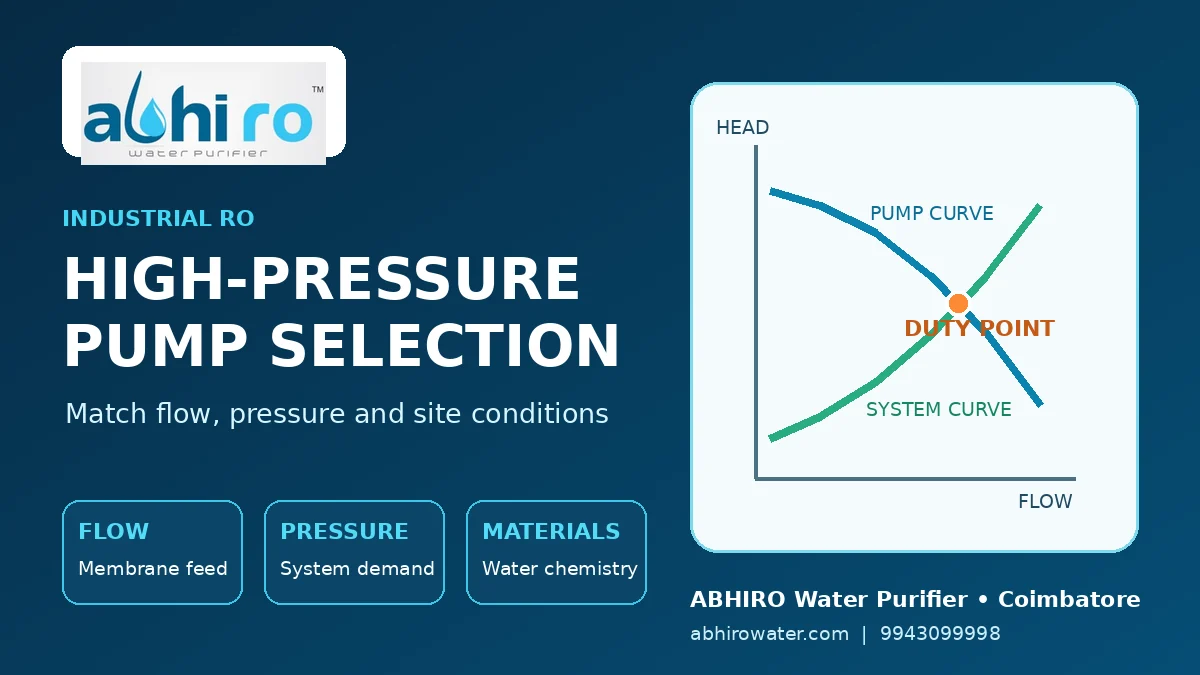
Match the RO plant’s required flow and pressure with a suitable pump duty point and site conditions.
Select an industrial RO high-pressure pump by defining the required feed flow and pressure, then checking the pump curve, suction conditions, materials, motor and controls.
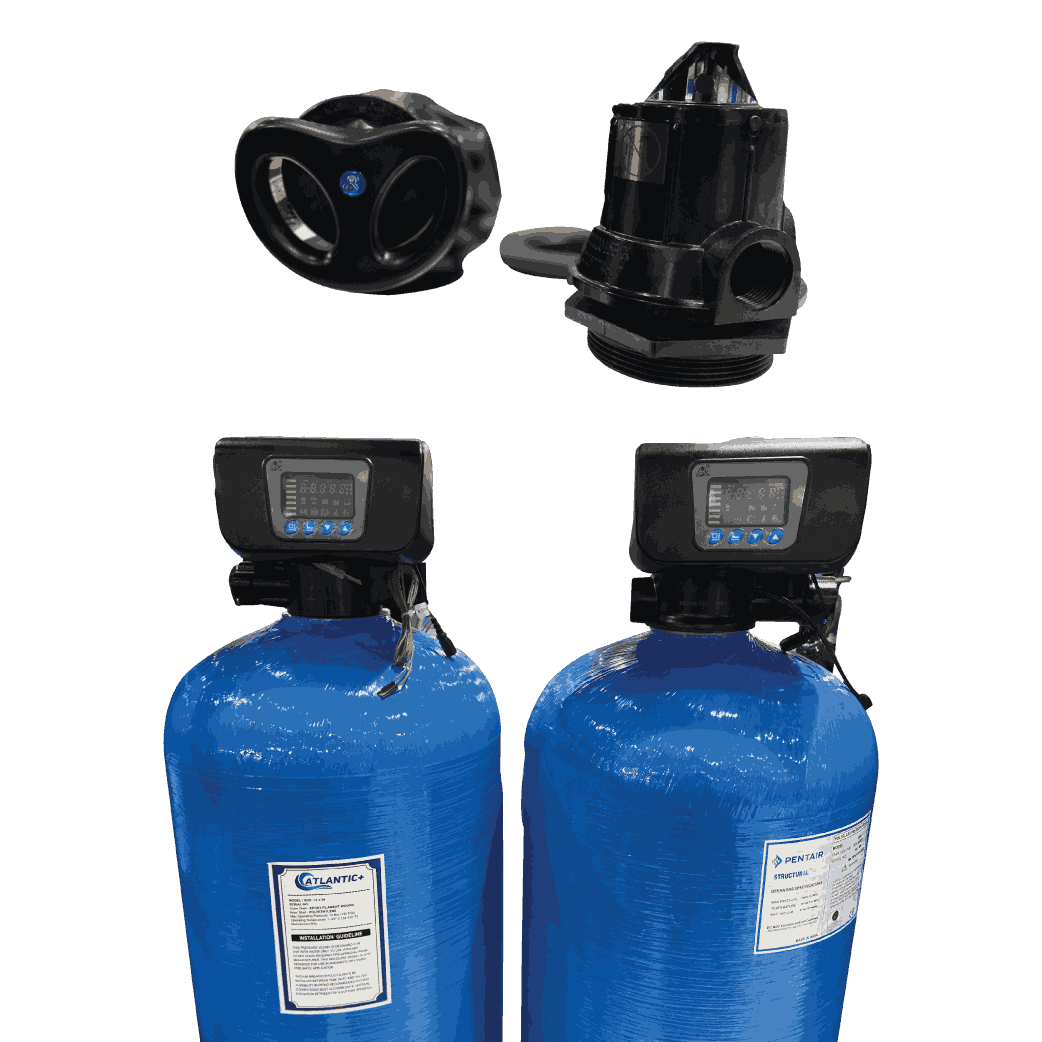
Learn what common manual multiport valve positions do, how to carry out a safe backwash-and-rinse sequence, and which operating mistakes can affect filter performance.
RO Plant Low-Pressure and Pressure-Drop Troubleshooting“Low pressure” can describe several different faults: low feed pressure, insufficient high-pressure pump discharge, excessive pressure loss through pretreatment or increased pressure drop across a…
Water Purifiers for Restaurants and Hotels: A Selection GuideHotels and restaurants use water for drinking, beverages, ice, cooking, dishwashing, laundry, guest rooms, boilers and cooling. These applications do not necessarily…
Hospital Water Purification Systems: A Risk-Based Compliance GuideHealthcare water safety extends beyond installing an RO unit. Hospitals contain vulnerable users, complex plumbing and specialised applications, so facilities need a documented…
Zero Liquid Discharge System Basics for Industrial PlantsZero liquid discharge (ZLD) is an engineered approach intended to eliminate routine liquid wastewater discharge by maximising water recovery and converting the remaining…