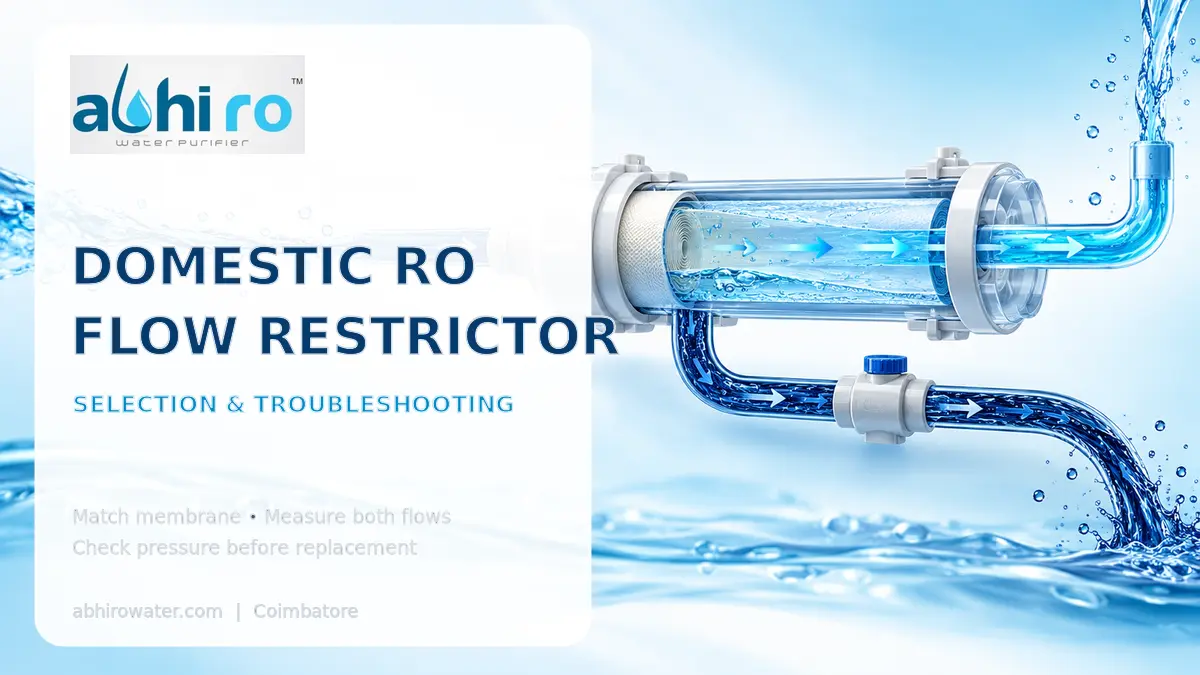
A domestic RO flow restrictor controls the concentrate, or reject-water, outlet from the membrane. The correct restrictor helps maintain the pressure and crossflow needed for stable membrane operation. Selection should match the membrane, pump and feed-water conditions—not a universal wastewater ratio. Diagnose pressure, permeate flow and reject flow together before replacing or modifying this small but important component.
What You Will Learn
- What an RO flow restrictor does
- How to select a compatible restrictor
- How to measure permeate and reject flow
- Symptoms of an incorrect or blocked restrictor
- A safe replacement checklist
- Frequently asked questions
What a Domestic RO Flow Restrictor Does
The flow restrictor creates controlled resistance in the membrane’s reject line. This resistance helps the booster pump develop working pressure while allowing concentrate water to carry rejected salts away from the membrane surface.
If the reject line is too open, pressure may remain too low and purified-water production may fall. If it is restricted too heavily, recovery may rise beyond the intended condition, concentrate flow may become inadequate and scaling risk can increase. The restrictor therefore works with the domestic RO membrane, booster pump, feed pressure, tubing and flushing arrangement as one hydraulic system.
How to Select a Compatible RO Flow Restrictor
Select the restrictor from the purifier and membrane requirements rather than colour, appearance or connector size alone. Two restrictors that fit the same tube can have very different internal flow characteristics.
- Membrane capacity: confirm the installed membrane’s rated GPD and model.
- Specified reject flow: use the purifier or membrane supplier’s intended operating arrangement where available.
- Pump and pressure: confirm that the pump can supply the required feed flow and pressure.
- Feed-water condition: TDS, hardness, temperature and scaling tendency influence safe recovery.
- Restrictor format: check whether the unit uses an inline restrictor, capillary insert or flush-valve assembly.
- Tubing and fittings: match the connection and flow direction without forcing incompatible parts.
A printed flow value, when present, is useful identification but should still be verified in the operating purifier. Actual flow changes with pressure, temperature, tubing condition and manufacturing tolerance.
How to Measure Permeate and Reject Flow
Measure both outlets under the same stable operating condition. Comparing only wastewater volume, or measuring while the storage tank is nearly full, can produce a misleading diagnosis.
- Confirm that the pre-filters are serviceable, the membrane is correctly installed and the feed supply is stable.
- Empty or isolate the storage tank as required by the purifier design so the unit produces water continuously.
- Allow the purifier to stabilise, following the equipment procedure.
- Collect purified water for a fixed time in a clean graduated container.
- Collect reject water for the same time in a separate graduated container.
- Convert both readings to the same unit, such as millilitres per minute.
- Calculate the observed reject-to-permeate ratio: reject flow divided by permeate flow.
- Compare the result with the purifier or membrane supplier’s intended operating condition, not a generic internet ratio.
Also record feed pressure, membrane-feed pressure if a safe test point is available, inlet TDS, permeate TDS and water temperature. These readings help distinguish a restrictor problem from a weak pump, blocked pre-filter or deteriorated membrane. ABHIRO’s RO booster pump troubleshooting guide explains the related pressure checks.
Symptoms of an Incorrect or Blocked Restrictor
The symptom indicates where to investigate, but it does not prove the restrictor is faulty. Confirm flow and pressure before replacing parts.
Very High Reject Flow and Low Purified-Water Flow
Possible causes include an oversized, missing or stuck-open restrictor; an open flush valve; low pump pressure; a membrane seal leak; or restricted feed flow. First verify that the flush control is in its normal production position.
Very Low Reject Flow
A blocked or undersized restrictor, kinked tube, scaled passage or incorrectly fitted capillary insert may reduce concentrate flow. Stop the purifier if pressure becomes abnormal or the pump labours. Do not drill or cut a restrictor to alter its rating.
Purified-Water TDS Rises
High permeate TDS can result from membrane damage, seal leakage, inadequate pressure, excessive recovery, incorrect flushing or changes in feed water. A restrictor can contribute to an unsuitable operating condition, but TDS alone cannot identify the failed component.
Safe Flow-Restrictor Replacement Checklist
Replace the restrictor only after recording the existing configuration and confirming the intended specification. Water and electricity share the purifier enclosure, so a trained technician should handle testing and repair.
- Switch off and unplug the purifier, close the inlet valve and relieve pressure safely.
- Photograph the tubing route, flow arrow, markings and flush-valve arrangement.
- Confirm the membrane capacity and the correct replacement reference.
- Install the restrictor in the correct direction with clean, fully seated tubing.
- Restore water and power according to the purifier procedure and inspect for leaks.
- Flush as required, then remeasure permeate flow, reject flow, pressure and TDS.
When a system has been modified with a different membrane or pump, review the entire hydraulic combination. Browse ABHIRO’s domestic RO systems for configuration context and use the Water Treatment Knowledge Centre for related maintenance guides.
Frequently Asked Questions
Is there one correct wastewater ratio for every domestic RO purifier?
No. The intended ratio depends on the membrane, feed-water chemistry, pressure, temperature, recovery design and flushing arrangement. Use the equipment or membrane guidance and verified operating measurements.
Can I clean a blocked RO flow restrictor?
Only follow a cleaning procedure approved for that component. Small capillary passages can be damaged or altered easily; replacement with the correct part is often safer than unapproved drilling, cutting or chemical cleaning.
Does a smaller restrictor always increase purified-water production?
No. Excessive restriction may raise recovery and pressure while reducing the crossflow needed to carry salts away. This can increase scaling risk or stress components without delivering stable membrane performance.
Should the restrictor be changed when fitting a different membrane capacity?
The complete pump, membrane, restrictor and flushing combination should be reviewed. Do not assume that the existing restrictor suits a membrane with a different rated capacity.
Get Domestic RO Spare Selection Support in Coimbatore
ABHIRO Water Purifier supplies domestic RO membranes, pumps, flow-control components, tubing, fittings and purifier spares for dealers, technicians and users. For selection support, contact ABHIRO in Coimbatore with photographs of the existing part, membrane label, pump label, measured permeate and reject flow, feed-water TDS and the purifier symptom.